



Barista’s Note
Artificial intelligence is reshaping global energy demand, and the world is responding with a quiet but profound shift toward nuclear power. The rise of small modular reactors (SMRs) and the acquisition of nuclear facilities by data center operators signal a new era, one where energy sovereignty and computational scale are becoming inseparable.
This edition examines how AI and nuclear energy are converging to redefine industrial infrastructure and national strategy. It explores both the optimism of technological self-sufficiency and the dystopian undertones of concentrated control, where the same systems that sustain digital intelligence could, under miscalculation or mismanagement, destabilize entire grids.
The central question remains: Is this the foundation of a sustainable digital civilization, or the blueprint of a fragile one?
The Deep Drip
Now I am Death, the Destroyer of Worlds – Robert J. Oppenheimer
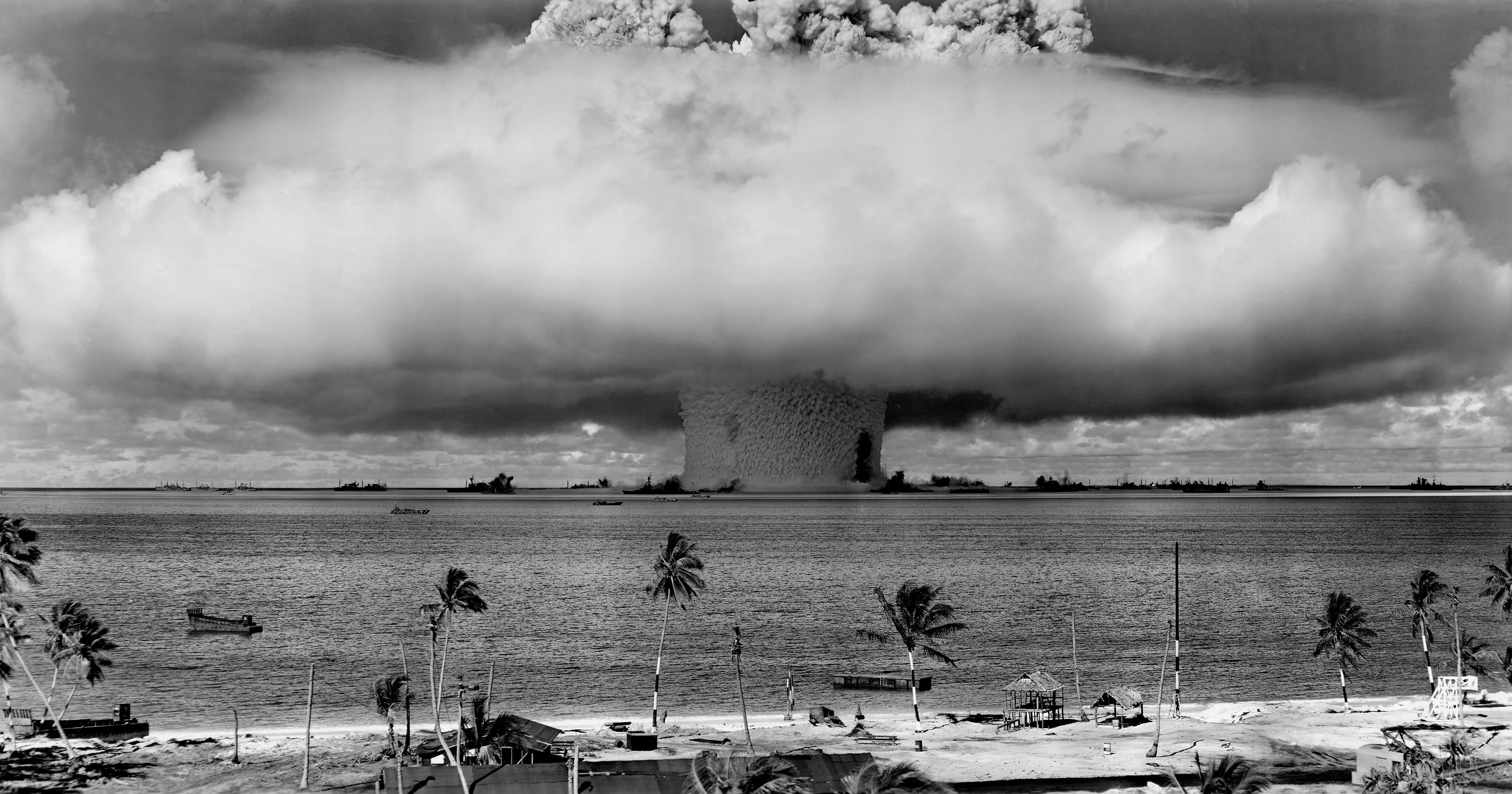
What comes to mind when you hear the words nuclear energy? Hiroshima and Nagasaki, where cities vanished in a flash. Chernobyl, where a reactor failure scarred generations. Fukushima, where a tsunami triggered a meltdown that still echoes in public fear. Nuclear energy sits in our imagination as both apocalypse and promise, a technology that can light entire nations or plunge them into ruin. The current AI race is reigniting the nuclear energy race. This time, the arms are not bombs but reactors, framed as the answer to an energy-hungry digital future. Data centres that feed artificial intelligence demand power on a scale that fossil fuels and renewables struggle to match. Nuclear is being reintroduced as the promise of sustainable, reliable, and carbon-free energy for the algorithms shaping tomorrow.
There are 11,000 data centres worldwide, with over 3000 in the US alone. It is projected that total energy consumption by data centres could reach 1000 TWh by 2027. Energy consumption from data centres currently stands at around 415TWh and projected to reach 945TWh by 2030. Today, most of this demand is met by thermal power plants, which burn fuel, consume vast amounts of water, and remain environmentally unsustainable. As artificial intelligence scales, these systems are already straining to keep pace. In anticipation of future needs and in the global race toward artificial general intelligence, tech giants are securing contracts and investing in nuclear infrastructure. Whether this trajectory leads to a utopian or dystopian AI future depends on how the balance between energy, risk, and control is managed.
The Nuclear Renaissance Brings Plenty
Currently 71% of the world’s nuclear energy capacity is held by just five countries. Yet, it almost feels like another nuclear race is silently brewing. But this time, the race promises a sustainable energy future where the world’s energy footprint is cleaner and hopefully safer. The present nuclear energy race is largely being fueled by tech giants seeking alternative sources of energy to power data centres for AI. Last year, Microsoft announced its first-of-a-kind deal with Constellation Energy to revive Three Mile Island, a nuclear energy plant synonymous with the demise of nuclear power in the United States. The deal is a 20-year power purchase agreement initiating the restart of Three Mile Island’s Unit 1, to be called Crane Clean Energy Center. In a similar deal, Meta struck a 20-year power purchase agreement with Constellation Energy, which will see to expanding the utility’s Clinton Nuclear facility power output, currently at 1,121MW, by about 30MW. This deal is expected to preserve about 1100 local jobs and deliver $13.5 million in annual tax revenue.

Conventional nuclear reactors are typically costly and require almost a decade to build. The estimated completion cost for a 1.1 GW nuclear plant facility is about 7.7 billion dollars and takes on average about 7.5 years to build in the US and about 6.3 years globally. Google announced it will be purchasing nuclear energy from small modular reactors being developed by Kairos to power AI and energy needs. Google will buy a total of 500 MW of power from six or seven reactors. Amazon Web Services (AWS) announced agreements with X-Energy, Energy Northwest and Dominion Energy to develop nuclear energy projects to meet their climate goals. X-Energy and Northwest plan to begin deploying four advanced SMRs in Washington in the early 2030s. The reactors are expected to generate roughly 320MW of capacity in the first phase, with an option to increase to 960MW, which is approximately enough energy to power 770,000 homes.
Small Modular Reactors
Recently, developments in the nuclear industry have been concentrated on modular nuclear reactors as an alternative to conventional nuclear reactors. Small Modular Reactors are small-scale nuclear reactors capable of generating up to 300MWe, which is approximately one-third of the generating capacity of conventional nuclear reactors. Their small footprint allows them to be sited in locations that are inconceivable for large nuclear power plants. They can be prefabricated, shipped and installed on site. SMR technology encompasses diverse reactor types, including Generation IV, fast-neutron, molten-salt and gas-cooled models. At a rated output of 10MWe or less, microreactors, which are subsets of SMRs, have smaller footprints than other SMRs.

Small Modular Reactor projects in North America are yet to become operational, and most are still in the planning or regulatory approval stages. The first planned SMR project in the US was the Carbon Free Project, intending to deploy six 77 MWe NuScale reactors. The estimated target electricity price after subsidies was about $89/MWh in 2023, an increase from $58/MWh in 2021. The increased generation cost led to the decision to cancel the project in 2023. The unsubsidized cost estimates at cancellation were the capital and generating cost of $20,139/KWh and $119/MWe respectively. China and Russia have operational SMR plants with rated power outputs of 210 MWe and 70MWe, respectively.
Current interests from tech giants in the nuclear energy industry are heavily invested in the rapid development of SMR technology. Microsoft and OpenAI have signaled strong commitments, with reports indicating plans to secure nuclear power as part of their long-term energy strategy for data centers. Microsoft has already hired nuclear energy experts to explore the integration of SMRs into its infrastructure, while OpenAI has openly acknowledged that achieving artificial general intelligence will require access to far more power than existing grids can supply. Similar signals are emerging from Google and Amazon, both of which are exploring nuclear partnerships to meet the accelerating energy demand of AI.
Better Regulations for a Safer Future
He who pays the piper dictates the tunes
The new demand for nuclear power is pushing regulators into uncharted territory. In the United States, the ADVANCE Act (Accelerating Deployment of Versatile, Advanced Nuclear for Clean Energy) was signed into law in 2024 to streamline licensing for advanced reactors and extend liability protections through 2065. The European Union is also revisiting its nuclear frameworks after the Brussels Nuclear Energy Summit, which reaffirmed nuclear’s place in achieving climate goals. These reforms highlight a global pivot toward accelerating approvals. Yet the faster the pace, the greater the risk of weakening safeguards that were originally designed to prevent catastrophe.
A persistent concern is the repurposing of fissile materials. Highly enriched uranium and plutonium, the same substances that power civilian reactors, are also essential for nuclear weapons. Expanding nuclear programs without airtight safeguards increases the chance of diversion, theft, or misuse in unstable regions. This tension is why negotiations around the Fissile Material Cutoff Treaty (FMCT) continue to stall at the international level.
Artificial intelligence adds a new layer of complexity. AI is already being piloted in nuclear contexts for predictive maintenance, grid optimization, and reactor monitoring. The U.S. Department of Energy has signalled interest in integrating AI into control systems, raising the question: who is accountable if an algorithm makes a faulty decision? Regulatory oversight in this area remains fragmented and largely untested.
Transparency is another weak link. Microsoft has quietly hired nuclear energy experts to explore small modular reactors for powering its data centers, while OpenAI has openly admitted that the path to AGI will require vastly more energy than today’s grids can supply. Amazon and Google are also exploring nuclear partnerships. Yet the details of these deals remain opaque to the public. If trillion-dollar AI companies are bankrolling nuclear infrastructure, how much of the governance is shaped by private contracts rather than public accountability? The old saying holds true: he who pays the piper dictates the tunes.
The future of nuclear power in the age of AI depends less on engineering breakthroughs than on governance choices. With the right transparency, safeguards, and accountability, nuclear energy could provide the backbone for a stable and sustainable AI-driven world. Without them, the same forces could drive us into a dystopia of concentrated power, opaque decision-making, and amplified risk. The line between utopia and dystopia is not written in the atom or the algorithm, but in the regulations that bind them.
Espresso Shots
Take a dive at summary figures and statistics around nuclear energy, datacenters & artificial intelligence.

Crème de la Crème
A peek at innovative energy companies and startups shaping the future of nuclear technology.
Led by J. Clay Sell
- Flagship technology, Xe-100 reactor, is a high temperature gas-cooled reactor
- Has a base capacity of 80MWe but can be configured into a four pack system to deliver up to 320 MWe
- Today, it announced the start of its confirmatory irridiation testing necessary to qualify its proprietory TRISO-X fuel pebbles for commecial use in its Xe-100 SMR
Led by Dan Sumner | Lou Martinez Sancho, Ph.D, MBB
- Developing transportable eVinci microreactor which is more of a nuclear battery than a traditional nuclear reactor.
- The high-temperature heat pipe reactor can generate 5 MW of electricity and up to 13 MW of heat from its 15 MW solid thermal core.
- The eVinci microreactor can be fully factory built, fueled, and assembled. A plug-and-play interface allows for rapid on-site installation in less than 30 days.
Led by Jacob DeWitte | Caroline DeWitte
- Designs next-generation fission power plants that produce abundant, affordable clean energy, starting with a flagship product, Aurora which can generate up to 75MWe.
- Heat generation from the Oklo powerhouses enable co-generation applications.
- Recently selected by the US Department of Energy for Advanced Nuclear Fuel Line Pilot Projects.
Led by Mike Laufer
- Developing novel advanced reactor technology that leverages TRISO (TRi-structural ISOtropic) fuel in pebble form combined with a low-pressure fluoride salt coolant.
- Molten fluoride salts have excellent chemical stability and tremendous capacity for transferring heat at high temperature and retaining fission products.
- The intrinsic low pressure in Kairos Power reactors enhances safety and eliminates the need for bulky and expensive high-pressure containment structures.
Led by Rex Geveden
- Engineers and manufactures reactor pressure vessels, steam generators and heat exchangers to the highest safety standards, enabling reliable clean energy. Developing a 50MW microreactor for remote power applications and industrial heat production.
- Signed a contract with GE Hitachi to manufacture reactor pressure vessel for their BWRX-300 SMR.
- Awarded a 10-year contract valued at $1.6 billion by the Department of Energy’s National Nuclear Security Administration to support the national security mission of establishing a supply of high purity depleted uranium (HPDU).
Led by John Hopkins
- NuScale Power Module™ (NPM) is the first and only small modular reactor (SMR), with a generating capacity of 77KW per module, to receive design approval from the U.S. Nuclear Regulatory Commission (NRC).
- A 12-module plant can generate up to 924 MWe of carbon-free electricity.
- Support for ENTRA1 Energy’s American landmark agreement with the Tennessee Valley Authority (TVA) to deploy up to 6 gigawatts of NuScale SMR capacity across TVA’s seven-state service region—the largest SMR deployment program in U.S. history.
Led by Christopher Levesque | John Gilleland
- Developing a flagship light water reactor, the natrium reactor, a 345-MW sodium fast reactor coupled with a molten salt energy storage system
- The storage technology can boost the system’s output to 500 MWe for more than five and a half hours when needed.
- Received notification in October 2025 from the U.S. Nuclear Regulatory Commission (NRC) that they have successfully completed the Environmental Impact Statement (EIS) for the Natrium project being developed in Wyoming and found no adverse impact to the environment
Led by Krishna Singh
- Developing next generation SMR with capacity of 1000MWth and 320MWe, design life of 80 years and capability to operate in Islanded Mode.
- Specializes in nuclear fuel and waste management.
Led by Heather Chalmers
- Developing a novel SMR, the BWRX-300, powered by commercially available fuel, that can be deployed for electricity generation and industrial applications, including hydrogen production, desalination, and district heating.
- It features significantly less capital cost per MW when compared with a typical water-cooled SMR, and using a combination of modular and open-top construction techniques, the BWRX-300 can be constructed in 24-36 months while achieving a volume reduction in plant layout.
Led by Neal Blue
- Leveraging on its experience with TRIGA (Training, Research, Isotopes, General Atomics) research reactors to develop next generation of advanced fission reactors.
- Pioneering the development of ATF (Accident Tolerant Fuel), with its signature SiGA silicon carbide composite material cladding, allowing fuel rods to withstand temperatures of over 1700C.
- Develops a wide variety of advanced materials for nuclear and other challenging engineering applications.
Grind Articles
A closer look at the research, strategies, and challenging questions shaping developments at the intersection of nuclear and artificial intelligence development.
- Uncertainties in estimating production costs of future nuclear technologies: A model-based analysis of small modular reactors
- Testing the feasibility of multi-modular design in an HTR-PM nuclear plant
- AI and misinformation are supercharging the risk of nuclear war
- Nuclear-weapons risks are back — and we need to act like it
- Reactivity disturbance suppression method for small modular reactors based on core coolant flow control
- Gamma noise to non-invasively monitor nuclear research reactors
- Potential for small and micro modular reactors to electrify developing regions
The Last Sip
These articles and blogs offer additional context and perspectives on this newletter issue.
- Boom or bubble? Inside the $3tn AI datacentre spending spree
- Energy supply for AI
- Small modular reactors explained
- Nuclear energy’s role in powering data center growth
- Is nuclear energy the answer to AI data centers’ power consumption?
- AI is consuming more power than the grid can handle — nuclear might be the answer
- AI goes nuclear
Beyond the Brew
The convergence of nuclear energy and artificial intelligence reflects a turning point in how humanity balances progress with control. As AI-driven systems begin to manage nuclear operations and data centers turn to atomic power for continuity, we are witnessing a fusion of two forces once feared for their volatility. Whether this alignment leads to resilience or dependence will depend on how wisely we design, regulate, and govern what comes next. The challenge before us is not only to generate more power or more intelligence, but to ensure that the systems we build remain accountable to the people they serve.
If your work intersects with health, tech, agriculture, policy, and/or sustainable innovation, let’s connect. I am open to collaboration, editorial partnerships, and consulting engagements focused on research & development, equitable systems and critical storytelling.